Types of Flowering Seeds: A Comprehensive Guide for Students and Gardeners
Published: 2 Dec 2025
Hello, Flower Friends!
What if planting seeds could be as easy as following a recipe? Understanding the types of flowering seeds is like choosing the right ingredients for a successful garden. Whether you’re a student learning about plant life or a gardener seeking year-round color, this guide covers the essentials.
In this article, we will explore categories of flowering seeds, common seed types based on growth conditions, selecting the right flowering seeds for your garden, and sowing tips. We will provide a conclusion at the end.
Think of it as laying the foundation for your garden. Are you ready to grow an energetic garden? Let’s start our journey!
To plant a garden is to believe in tomorrow.Audrey Hepburn
Types of Flowering Seeds
Seeds are generally categorized based on their life cycles, which determine how long they take to grow, bloom, and complete their life process. They are primarily of three types:
- Annual Flowering Seeds
- Perennial Flowering Seeds
- Biennial Flowering Seeds
Annual Flowering Seeds
Annual flowering seeds remind me of a summer fling, short-lived but full of vibrant energy and color. They grow, bloom, and complete their life cycle in one season, making them perfect for adding instant charm to your garden.
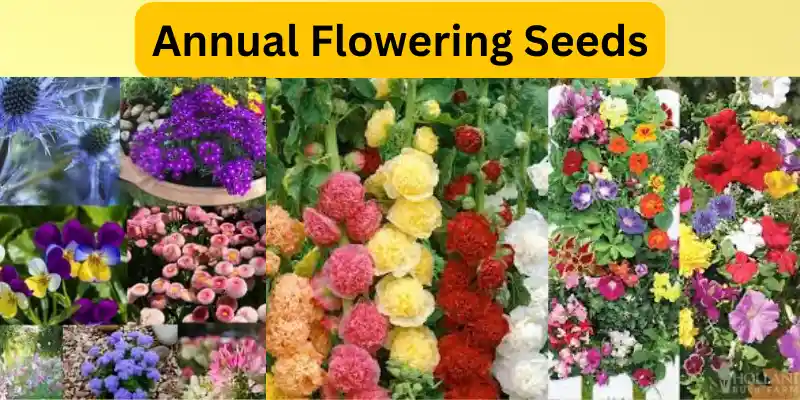
I’ve loved growing zinnias and marigolds in my backyard because they produce quick results and nonstop blooms. I choose annuals when I want a colorful garden quickly.
Examples of Annual Flowers
- Sunflowers
- Marigolds
- Zinnias
Perennial Flowering Seeds
Perennials are like loyal friends; they come back year after year, adding steady beauty to your garden. I planted daisies in my garden two years ago, and watching them return every spring feels like a little miracle.
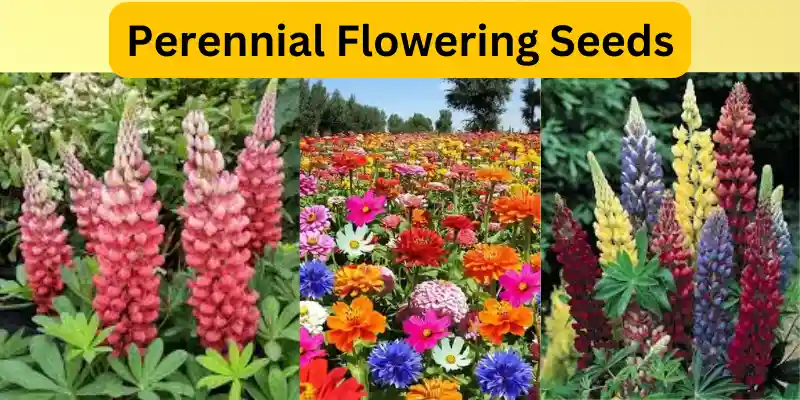
These seeds are ideal if you prefer low-maintenance plants that offer long-term rewards. Perennials save time and effort, allowing me to experiment with other plants each season.
Examples of Perennial Flowers
- Daisies
- Lavender
- Coneflowers
The love of gardening is a seed once sown that never dies.Gertrud
Biennial Flowering Seeds
Biennial flowering seeds are like slow-cooked meals; they take time, but are worth the wait. These seeds germinate in the first year and bloom in the second, adding suspense to your gardening journey.
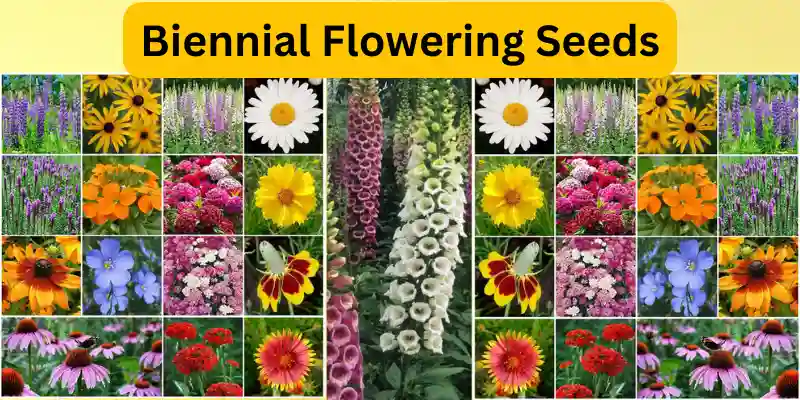
I once grew hollyhocks, and seeing them bloom in their second year was incredibly satisfying. If you have the patience, biennials can reward you with some of the most beautiful blooms.
Examples of Biennial Flowers
- Foxglove
- Hollyhock
- Sweet William
Common Seed Variety Based on Growth Conditions
As people thrive in different climates, so do seeds: they prefer sunlight and soil. You can create the perfect environment for vibrant, healthy blooms by matching these needs. Here are two main types based on growth:
- Sun-loving Flowering Seeds
- Shade-Loving Flowering Seeds
1. Sun-loving Flowering Seeds
Sun-loving seeds thrive in full sunlight and are like the extroverts of the garden; they love soaking up the spotlight. I’ve grown sunflowers and zinnias in my garden, and they always add a cheerful vibe. These seeds are ideal for areas with 6–8 hours of direct sunlight.
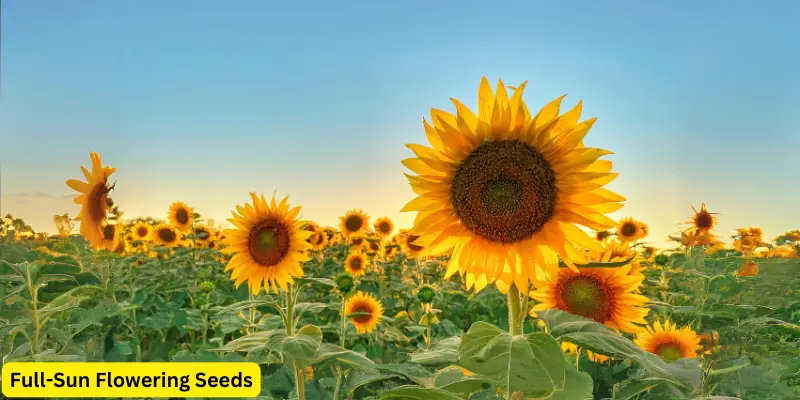
They grow best in sunny spots, particularly in open areas with ample direct sunlight. Watching them reach for the sun reminds me of positivity’s power.
| Flower Name | Germination Time | Height | Bloom Season |
| Sunflower | 7-10 days | Upto 12 feet | Summer |
| Zinnia | 5-7 days | 1-3 feet | Summer to fall |
2. Shade-Loving Flowering Seeds
Shade-loving seeds are the introverts of the plant world; they flourish in calm, shady corners. I once planted impatiens in a shady spot near my porch, and their soft, delicate blooms added a peaceful charm. These seeds are perfect for gardens with limited sunlight.
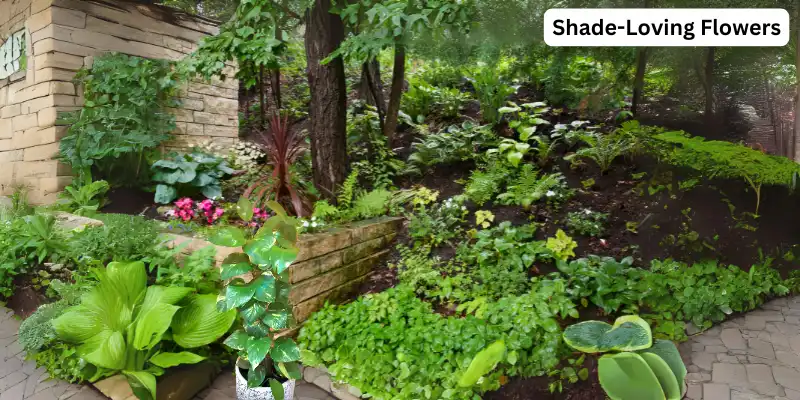
These seeds are ideal for areas with limited sunlight, creating a relaxed and soothing garden vibe. If you have a shaded area, these plants will bring life to those often-overlooked spaces.
| Flower Name | Germination Time | Height | Bloom Season |
| Impatiens | 10-14 days | 6-24 inches | Spring to fall |
| Begonia | 10-15 days | 6-18 inches | Summer |
How to Choose the Right Flowering Seeds for Your Garden
Choosing the right flowering seeds for your garden is like finding the right shoes for a long walk—each step depends on comfort, durability, and fit. Similarly, selecting seeds that align with your garden’s climate, soil, and sunlight ensures your plants thrive and bloom beautifully.
Factors to Consider
Here are the three main factors to consider while choosing the right flowering seeds:
- Climate Zone
- Sunlight Requirements
- Soil Type
1. Climate Zone: Choose seeds suited to your region’s climate.
2. Sunlight Requirements: Determine whether your garden space is full sun, partial shade, or full shade.
3. Soil Type: Some flowers thrive in specific soil conditions, such as loamy or clay soils.
How to Properly Sow Flowering Seeds
Sowing flowering seeds is like laying the foundation for a house; it requires proper preparation to ensure success. Your seeds will thrive and bloom beautifully if you prepare the soil and plant them at the correct depth.
Step-by-Step Guide to Seed Sowing
- Prepare the Soil: First, loosen the top few inches of soil and remove any waste products.
- Plant the Seeds: Follow in-depth instructions based on the seed packet.
- Watering: Water gently but thoroughly to ensure proper germination.
- Care and Maintenance: Fertilize regularly and watch out for pests.
Tips for Maximizing Flowering Seed Growth
- Use organic compost to enrich the soil.
- Plant flowers with similar water and sunlight needs together.
- Remove regularly spent flowers to encourage new blooms.
Flowers are the music of the ground. From earth’s lips spoken without sound. Edwin Curran
Final Verdict
Selecting the types of flowering seeds is the foundation of any successful garden, much like choosing the ingredients for a recipe.
Whether you’re planting annuals for instant color or perennials for long-lasting beauty, understanding growth conditions and proper sowing techniques will ensure a thriving garden.
Ready to see your garden bloom to its fullest potential? Discover the ideal flowering seeds today and create a space filled with lush, colorful blossoms year-round!
Happy Gardening!
| Interesting Facts |
|---|
1. Sunflowers in Space: As part of scientific research, sunflower seeds were sent to space and grown by astronauts on the International Space Station. 2. Marigold’s Pest Control: Marigold seeds are popular because their flowers naturally repel pests like nematodes, making them great for companion planting. 3. Daisy’s Long History: Daisies, common garden flowers, were cultivated as far back as Ancient Egypt, valued for their beauty and medicinal uses. |
Frequently Asked Questions
You can also read some fundamental questions related to the variety of flowering seeds:
The blooming time varies depending on the type of seed. For example, annuals like zinnias bloom in 1-2 months, while biennials take two years.
Yes, many flowering seeds can be started indoors. It allows you to control conditions like temperature and light for optimal germination.
Loosen the soil, remove debris, and enrich it with organic compost. It ensures proper aeration and provides nutrients for the seeds to thrive.
The best time depends on the seed type, but spring is ideal for most flowering seeds. Check specific seed packets for precise planting times.
Consider your climate, sunlight availability, and soil type. Match these factors with the seeds’ requirements to ensure healthy growth and vibrant blooms.
Sun-loving seeds like sunflowers and zinnias thrive in 6-8 hours of direct sunlight daily, making them perfect for open, sunny garden spaces.


- Be Respectful
- Stay Relevant
- Stay Positive
- True Feedback
- Encourage Discussion
- Avoid Spamming
- No Fake News
- Don't Copy-Paste
- No Personal Attacks
- Be Respectful
- Stay Relevant
- Stay Positive
- True Feedback
- Encourage Discussion
- Avoid Spamming
- No Fake News
- Don't Copy-Paste
- No Personal Attacks
